Sealed till the round. Then it opens.
Built with Chutes and drand.
A secret worth checking.
CACHET is built to take its collection seed from a Chutes model, lock it to a future drand round with timelock encryption, and record its hash on chain when the seal is attached. Claiming does not wait for the seal. Pieces start as pending seals and get the seal later, on the same NFTs. Two limits: the Chutes attestation is not checked, and whoever makes the seed can see it.
Each claimed piece stays sealed until someone sends a valid reveal after the round. Buys, owners and transfers stay public on chain.
Buy $CACHET wherever you already trade. A piece lands in your wallet moments later.
Local demo. Buying and minting are not live.
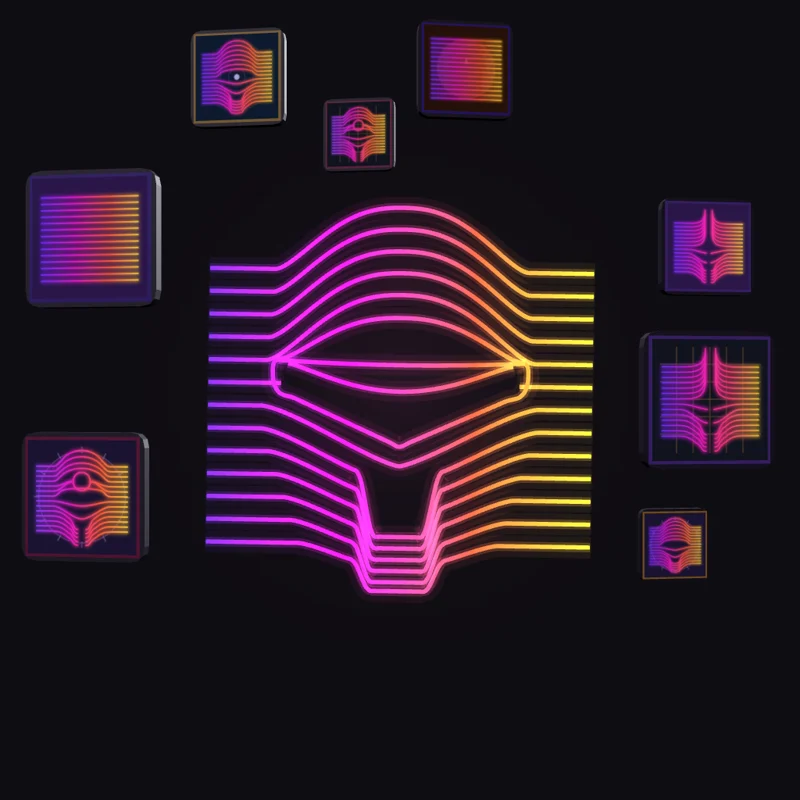
Flat lines are sealed. The masked head is the reveal.
Tap a piece floating behind the head to see it up close.
Sealed till the round.
How the seal is meant to work
- 1
A Chutes model makes the seedattestation not checked yet
- 2
Locked to a drand roundround and ciphertext hash checked
- 3
One transaction opens every pieceafter the round has passed
Every coin gives you a coin.
This one gives you art.
One buy, one piece.
Press a button below and watch it happen.
You buy
Your piece seals
You hold the piece
Buy $CACHET wherever you already trade. Your piece mints sealed moments later.
Seal pressdrand quicknet, a round every 3 s
Just trying it? Pick a line.
Try a buy
Pretend to buy some $CACHET. Your piece mints sealed behind flat lines, waits for a demo round, then the lines part.
Demo values in $CACHET. A longer line is a bigger buy.
Demo minimum: 500K $CACHET. The 250K buy gets no piece.
0 buys, 0 pieces
Opens at demo round
site simulationnone yet
No piece sealed yet. A real launch fixes one drand round for the whole collection.
Your piece shows up here.
This exact mix: 1 in 0
How is my piece decided?
Four facts about a buy decide the piece: which pool, which wallet, which buy it is, and how much. They are hashed into a seed; the seed picks the five traits.
The seed for this buy
This is a demo. Buying and minting are not live.
What is public, what stays private
Buying and minting are not live. This maps what the contract will show once they are.
Public
- The buy, the owner and every transfer
- The sealed piece
- The seed, ciphertext and evidence hashes, once the collection is published
Hidden by the seal
- Which traits each piece has, until the reveal
The seal hides traits from buyers, not from whoever made the seed. That trust gap is not closed yet.
Line bench
Build a piece.
Each trait is one line. Pick a stop and the line bends over it.
Five traits, five lines
CACHET for your token
Add your own NFT to your coin
$CACHET is the working example of the collection technology. Give your token its own pieces.
- Bring your coin.Launch on Pons or anywhere on Robinhood Chain.
- Build your collection.Choose the palette, art sets and trait weights.
- Fund the delivery.You pay the deploy fee and fill the gas tank. Buyers get their pieces when they connect or check their address.
GET MY PIECES
Get the pieces from your token buys, wherever you traded.
One signature. Only the network fee.
Paste a wallet address to find its pieces.
Sample piece
Check a buy.
A transaction hash is all the mint route needs. Built and tested locally. Not deployed. No address.
Same swap, same piece.
THE RAIL
Each new piece joins your rail. Try another buy to add one.
site simulationBrowse the collection.
Explore 48 sample pieces. Find a mix you like.
site simulationNo piece matches that mix. Remove a filter.
THE ODDS
Each seed picks one option from each group, weighted in 1,000 parts. Arc length is the weight. The lit arc is your pick.
Site piece and chain piece.
Same traits. The image on the right is what the contract draws.
How the piece reaches your wallet
No contract published yet.
- You buy.
- The buy is proven from the chain.
- You send the mint yourself.
- The piece is in your wallet moments later.
What runs when you buy.
Built and tested locally. Not deployed. No address.
The tech
What is built, what has run, and what is still missing.
- Generate
- Built with Chutes on Bittensor SN64. On 2026-09-27 the model list and instance lookup answered, but the model call was refused with a payment error (HTTP 402), so no seed exists yet. Checking the hardware attestation (DCAP and NVIDIA) and tying the output to it are not built.
- Seal
- Built with drand quicknet and tlock-js. The ciphertext carries the pinned chain and its reveal round, and both are checked. No live seal or round is set.
- On chain
- The seed, ciphertext, attestation and manifest hashes become permanent when the first claimer publishes the collection (CREATE2). That happens later than the offline seal.
- Reveal
- After the round plus 120 seconds, anyone may send
revealSeed(seed). The contract checks it against the commitment and refuses early, wrong or repeated reveals. - Holder preview
- Planned as a custom Lit action that checks you still own the piece on chain 4663 and returns only that piece. No service is set up, so preview is off. A holder can copy a preview, and selling the piece cannot take that back.
- Pay in Zcash
- Built with the NEAR Intents 1Click code path and switched off. Review found that someone watching a pending claim could redeem its code first, so the door stays closed until that is redesigned and tested. If it opens later, transparent ZEC would settle as Base USDC at an operator treasury, with no automatic bridge.
- Contract
- CachetCollection, event Minted, 14 Forge unit tests passing. Five weighted trait groups and fully on-chain SVG art.
- Built with
- Solidity 0.8.24, OpenZeppelin ERC-721, Chutes, drand tlock-js, the NEAR Intents 1Click source, and Pons on Robinhood Chain (id 4663). Using a vendor does not mean a partnership.
An evidence hash only proves which bytes were committed. It does not prove the hardware or tie the model output to it. Whoever makes the seed may know it. Buys, owners, amounts and the reveal transaction stay public.
The proposed rule
Sealed till the round.
Four rules connect your buy to your piece.
Same swap, same piece.
The pool id, buying wallet, swap number and amount determine the seed. Repeat all four and the piece stays the same.
One buy, one piece.
A buy that meets the minimum would receive one ERC-721 piece after the buy is checked.
A small buy fires nothing.
Try an amount below your minimum, shown live above. No sealed piece is fired.
The piece goes to the wallet that bought.
The buying wallet would hold the piece. Connecting a wallet here only reads its address and balance.
No pool or collection address is published.
The minimum buy, supply and launch date are unpublished; the minimum here is your own number.
Read the arithmeticQuestions.
Do I need to claim my piece?
Yes. Open Get my pieces, connect the wallet you bought with, and claim. Your wallet pays the small network fee for the mint, and the piece lands in the wallet that bought.
Does every buy get a piece?
Only a buy at or above the collection's minimum. Smaller buys are ordinary swaps like any other, and never bring a piece.
Can I sell the piece?
Once minted, it is an ordinary ERC-721 in your wallet, so yes, the same way as any other NFT. Nothing about it is restricted or soulbound.
Is there a contract yet?
No. Nothing is deployed, and no address exists on any network yet.
What if the site is down?
The buy is on chain either way. The authorisation can be re-issued once the site is back, and you claim then from Get my pieces.
What decides what my piece looks like?
A seed built from the pool, the buyer's wallet, which numbered buy it was, and the amount, all packed together and hashed. The same four inputs always give the same seed and the same piece.
Every swap has a look.
48 buys from the sample wallet. One piece at a time.
site simulationBuilt with: Chutes on Bittensor SN64, not yet verified drand tlock-js NEAR Intents 1Click, switched off